
WHO declares Ebola outbreak in DR Congo an international emergency as cases rise in eastern Congo and neighbouring Uganda. Here’s everything to know about the Ebola outbreak, symptoms, spread, risks, and global response.
The World Health Organization has officially declared the ongoing Ebola outbreak in the Democratic Republic of the Congo a public health emergency of international concern, raising alarm over the increasing spread of the deadly virus across the region.
The announcement comes as health officials continue monitoring rising infections in eastern DR Congo, particularly in the Ituri province, where authorities have reported approximately 246 suspected cases and at least 80 deaths linked to the outbreak.
Although the WHO stopped short of labeling the Ebola outbreak in DR Congo a pandemic emergency, officials warned that the situation carries a serious risk of escalating into a much larger regional health crisis if containment measures fail.
Ebola Outbreak in DR Congo Raises International Concern
According to the WHO, the current outbreak is linked to the Bundibugyo strain of the Ebola virus, a rare but dangerous species for which there are currently no approved vaccines or antiviral treatments.
Health officials say the outbreak has already spread across multiple health zones, including Bunia, the capital of Ituri province, as well as the mining towns of Mongwalu and Rwampara.
Laboratory testing has confirmed several Ebola infections, while authorities continue investigating numerous suspected cases and deaths.
How worrying is the global Ebola emergency?
The WHO also confirmed that one Ebola case has been identified in Kinshasa after a patient reportedly traveled from the affected Ituri region.
The Ebola outbreak in DR Congo has also crossed international borders, with neighbouring Uganda reporting confirmed cases connected to the outbreak.
Ugandan health officials confirmed that a 59-year-old Congolese man who recently died tested positive for the Ebola virus. Authorities later returned his body to DR Congo.
Security Crisis Increasing Risk of Ebola Spread
The WHO warned that the ongoing humanitarian and security crisis in eastern DR Congo is making containment efforts more difficult.
Parts of eastern Congo continue to face armed conflict, population displacement, and limited healthcare access. Health experts believe these conditions significantly increase the chances of the virus spreading rapidly between communities and neighbouring countries.
The agency noted that high population mobility, informal healthcare facilities, and active mining operations in the affected areas create additional challenges for health authorities trying to track infections and isolate cases.
A separate Ebola case was also reportedly confirmed in the eastern city of Goma, according to multiple regional reports.
Countries bordering DR Congo are now considered high-risk zones due to ongoing travel and trade activity across borders.
What Is Ebola and How Does It Spread?
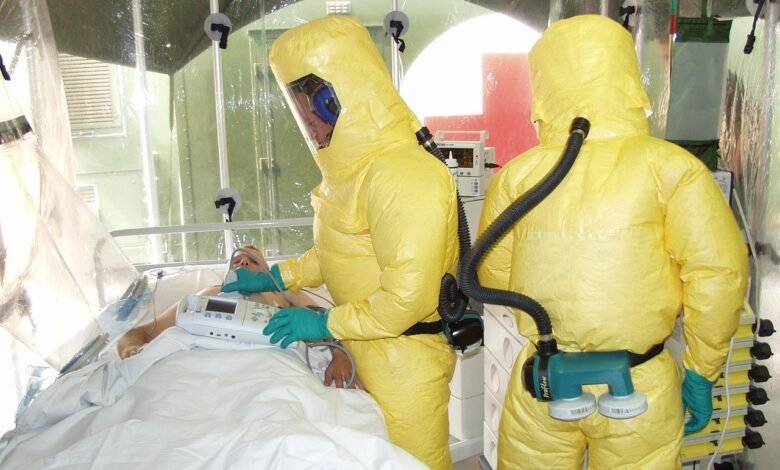
Ebola is a severe viral disease that spreads through direct contact with infected bodily fluids such as blood, vomit, saliva, sweat, and other secretions.
The disease is believed to originate from infected wild animals, particularly fruit bats, before spreading to humans.
Once infected, symptoms can appear between two and 21 days later.
Early symptoms include:
- Fever
- Muscle pain
- Severe headache
- Fatigue
- Sore throat
As the disease progresses, patients may experience:
- Vomiting
- Diarrhoea
- Rash
- Organ failure
- Internal and external bleeding
The Bundibugyo strain involved in the current Ebola outbreak in DR Congo has caused fatality rates of approximately 30% in previous outbreaks.
WHO Issues Emergency Recommendations
The WHO has advised both DR Congo and Uganda to establish emergency response centres focused on surveillance, contact tracing, infection prevention, and rapid treatment.
Health officials recommend immediate isolation of confirmed Ebola patients until repeated laboratory testing confirms they are virus-free.
The agency also urged neighbouring countries to strengthen border surveillance and improve health reporting systems to identify possible infections early.
Despite growing concern, the WHO stated that countries outside the affected region should not close borders or impose travel restrictions, explaining that such measures are often driven by fear rather than scientific evidence.
WHO Director-General Tedros Adhanom Ghebreyesus warned that there are still “significant uncertainties” regarding the true scale of the Ebola outbreak in DR Congo and its geographic spread.
DR Congo’s Long History With Ebola
Ebola was first identified in 1976 in what is now DR Congo. Since then, the country has experienced multiple outbreaks, making this the 17th recorded Ebola outbreak in the nation’s history.
One of the deadliest outbreaks occurred between 2018 and 2020, when nearly 2,300 people lost their lives.
Last year alone, another Ebola outbreak in a remote region killed 45 people.
Over the past five decades, Ebola outbreaks across Africa have resulted in approximately 15,000 deaths.
Health experts continue warning that rapid response, regional coordination, and public awareness remain critical in preventing the current Ebola outbreak in DR Congo from escalating further.
Conclusion
The WHO’s decision to declare the Ebola outbreak in DR Congo an international emergency highlights the growing seriousness of the situation in Central Africa.
As health authorities race to contain the virus, concerns remain high over regional spread, healthcare limitations, and the absence of approved vaccines for the Bundibugyo strain.
The coming weeks will be critical in determining whether international coordination and emergency health measures can successfully prevent a wider Ebola crisis.