

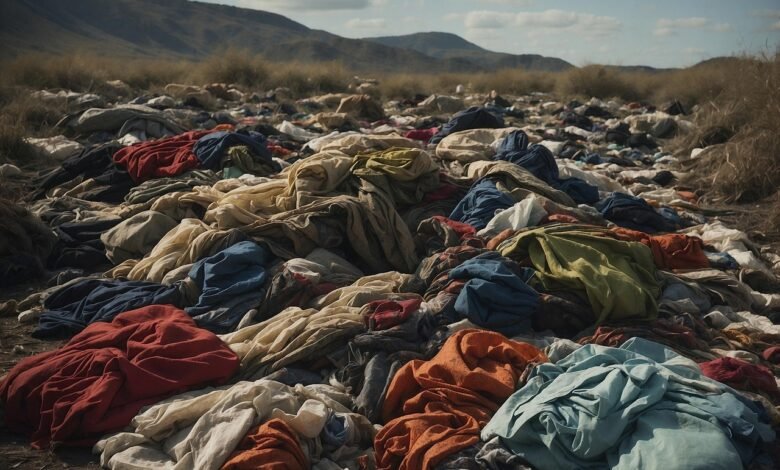
Millions of donated clothes don’t end up where you think. Discover how second-hand garments are impacting Chile’s desert and what solutions are emerging.
Donating old clothes often feels like a responsible and eco-friendly choice. Many people in countries like the United Kingdom and United States believe their unwanted garments will be reused or recycled.
However, the reality is more complex. A significant portion of donated clothing ends up traveling across the globe—sometimes with unintended environmental consequences.
The Global Second-Hand Clothing Trade
Every year, huge quantities of used clothing are exported worldwide. One of the largest destinations is Chile, particularly through the northern port city of Iquique.
This region operates under a special free-trade zone known as Zofri (Zona Franca de Iquique), where goods can be imported and sold with reduced taxes. This has made it a major hub for second-hand clothing distribution across Latin America.
What Happens to Unsold Clothes?
While many of these garments are resold locally or exported to nearby countries, not all items find new owners. Lower-quality or damaged clothing often becomes difficult to sell.
Since proper disposal can be costly, some traders resort to illegal methods. This includes dumping unwanted clothing in nearby areas such as the Atacama Desert—one of the driest regions on Earth.
Estimates suggest that tens of thousands of tonnes of clothing are discarded this way each year, creating large piles of textile waste.
Environmental and Local Impact
The buildup of textile waste in desert areas presents serious environmental challenges. Unlike organic materials, many modern fabrics take years to decompose.
Local authorities in nearby communities like Alto Hospicio face difficulties managing the issue due to limited resources and the vast, open landscape.
Efforts to monitor illegal dumping are ongoing, but enforcement remains a challenge.
Economic Benefits vs. Environmental Costs
The second-hand clothing industry does provide economic opportunities. Many people are employed in sorting, selling, and distributing garments, especially women in local communities.
Markets offering low-cost clothing attract both locals and tourists, making fashion more accessible. However, the environmental cost of unsold waste continues to raise concerns
New Solutions and Innovations
In response to growing pressure, new initiatives are emerging to tackle the problem.
Organizations focused on sustainability are working to promote a circular economy—where materials are reused instead of discarded. One such initiative involves building facilities that can process textile waste into reusable materials.
These factories aim to transform old clothes into fibers that can be used in products like:
- Furniture
- Insulation
- Automotive materials
- Mattresses
A Step Toward Change
New industrial projects in northern Chile are being developed to handle large volumes of textile waste more efficiently.
These facilities are designed to operate without water or harmful chemicals, making them environmentally friendly while also creating new business opportunities.
Government Action
Chile is also introducing stricter regulations under its Extended Producer Responsibility laws. These policies aim to make companies responsible for the entire lifecycle of their products, including disposal and recycling.
This means brands and importers may soon be required to:
- Fund recycling systems
- Manage textile waste
- Ensure proper disposal
While donating clothes remains a positive action, this situation highlights the importance of understanding the full lifecycle of what we discard.
As global awareness grows, both consumers and businesses are being encouraged to adopt more sustainable practices.
The future of fashion may depend not just on what we buy—but on what happens after we let it go.
“The death of Claude Lemieux comes during a period where fans across the sports world have been mourning the loss of several legendary public figures and icons in recent months, including reports surrounding Chuck Norris that sparked massive reactions online.”